
- Coverage119 ZIP codes · 2 counties
- HoursOpen 24/7
Refrigerator Repair Near Me, Across Long Island
How the visit is charged
The diagnostic fee is credited against the repair
Answered 24/7Three-hour arrival window90-day parts warranty
- Diagnosis
- The fault is found before anything is quoted
- Approval
- Work starts only after your yes
- Hours
- Phones answered 24/7
- Warranty
- Parts 90 days · labor 30 days
Request a Repair
Two short steps. No cost and no obligation to book.
- Answered 24/7
- 3-hour arrival window
- Price approved first
- EPA 608 refrigerant handling
- 90-Day Parts & 30-Day Labor Warranty
- Open 24/7
- 119 ZIP codes covered
The refrigerator in figures
- Usual visit length
- 1–3 hours
- Faults on file
- 40
- Makes we work on
- 37
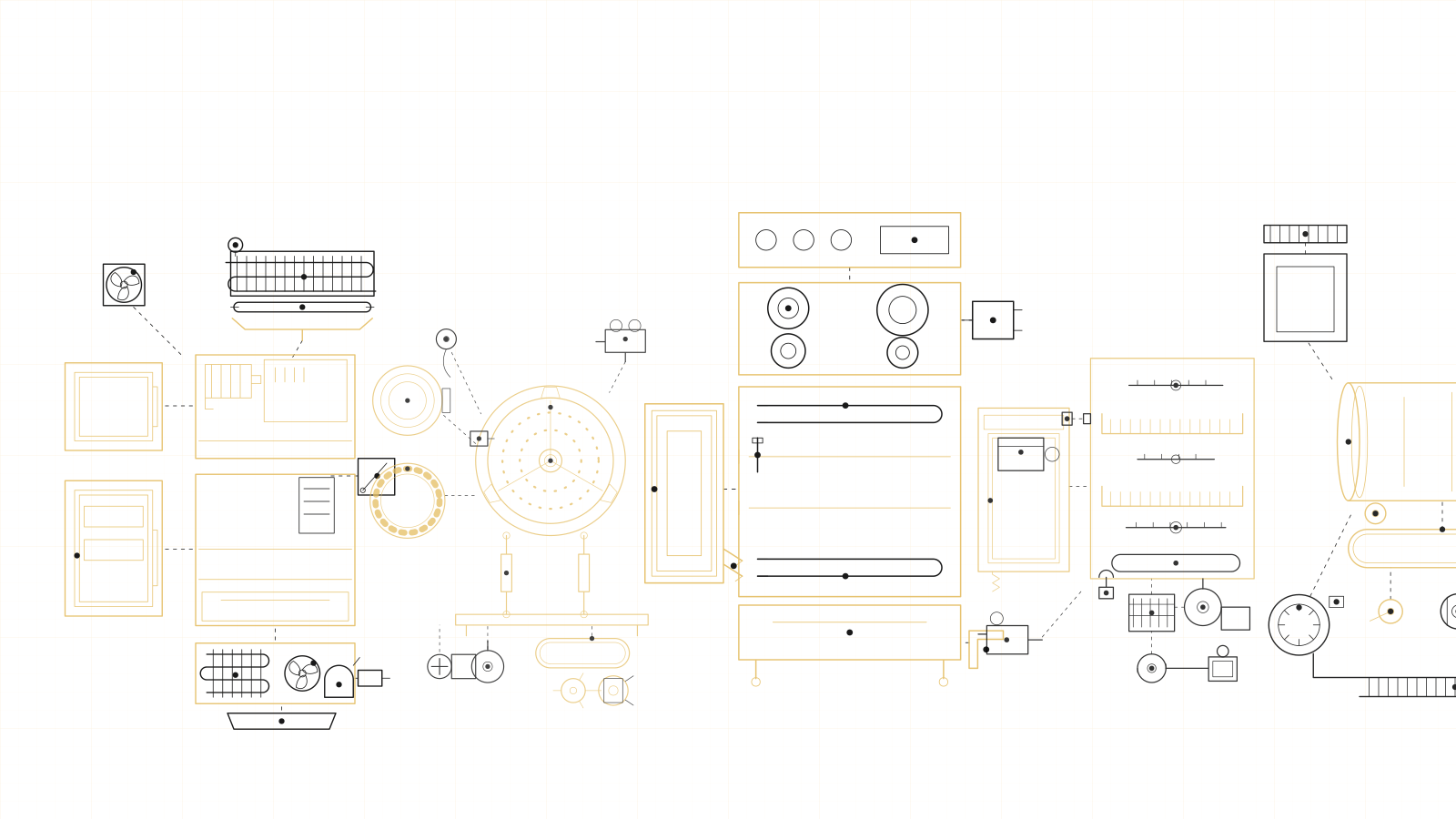
Anatomy · Refrigerator
The parts of a refrigerator that wear out first
- 01Condenser coilOnce dust coats the coil, heat has nowhere to go; the compressor barely rests and the cabinet still creeps warmer.
- 02Condenser fanA fan that drags or seizes lets the compressor overheat and trip its overload, so cooling arrives in bursts.
- 03Compressor and start relayRepeated clicking every few minutes without the compressor starting usually indicts the relay rather than the compressor.
- 04Evaporator coilWhen frost closes the fins completely, the freezer stays cold while almost no chilled air reaches the fresh-food section.
- 05Evaporator fanThis fan sends freezer air down to the fresh-food compartment; if it stops, the freezer holds temperature and the fridge rises.
- 06Defrost heaterWith the element open, coil frost is never melted, and within a day or two the airflow is choked off.
- 07Defrost thermostatIf this bimetal switch fails open, the heater gets no power regardless of what the timer or control board requests.
- 08Defrost drain and drain panIce or sludge in the drain sends meltwater under the crisper drawers or out across the kitchen floor.
- 09Air damper and fresh-food ductA damper jammed open or closed leaves one compartment off target while its neighbor behaves normally.
- 10Door gasketA gasket that no longer seals draws room air in constantly: condensation on the outside, a compressor that never stops.
Sequence of checks
Where a technician starts on a refrigerator
- What we test, in turn
- airflow is tested first, defrost second and the sealed system last — because an evaporator encased in ice by a dead defrost heater gives precisely the same 'not cooling' symptom as a failed compressor, and several hundred dollars separate those two repairs
- The symptom owners misjudge
- a warm fresh-food section above a freezer that is still cold, which looks like the start of a total failure and almost always turns out to be an obstructed air path or a stopped evaporator fan
- Why Long Island matters here
- spare refrigerators kept in unheated garages, porches and basements, which sit above their rated ambient range every July and below it every January
Fault register · 40 entries
The refrigerator failures behind most of our calls
01
Refrigerator Not Cooling
Priority: highThe light comes on and the cabinet may even hum, yet the thermometer climbs above 40°F and food starts to spoil early. Somewhere along the chain that removes heat from the box, one link has stopped carrying its share of the load.
- Likely origins
- evaporator fan motor stopped · frosted evaporator coil · dust-packed condenser coils · failed start relay · low refrigerant charge
- The fix
- Diagnosis begins with listening: whether the compressor starts, whether the condenser fan turns, and whether air moves out of the freezer vents. We then look at the evaporator for a frost blanket and meter the relay and fan circuits. Once the failed link is replaced, we leave a probe thermometer in the fresh-food section and confirm it settles between 35 and 38°F.
02
Ice Maker Has Stopped Producing
Priority: lowThe bin stays empty or holds only a few stale cubes, even though the freezer itself is cold. Ice production depends on water arriving at the mold, the mold reaching harvest temperature and the ejector completing its turn, so any of those can stall it.
- Likely origins
- frozen fill tube · failed water inlet valve · shut-off arm left raised · worn ice maker module · freezer above 10°F
- The fix
- First we confirm the freezer is cold enough for harvest and that the shut-off arm or switch is in the run position. The fill tube is checked for an ice plug and the inlet valve is metered and flow-tested. If water arrives but the module never cycles, we trigger a test harvest and replace the module when it fails to rotate. A full harvest is watched before we leave.
03
Water Pooling Inside or Under the Fridge
Priority: mediumA puddle on the floor or water collecting beneath the crisper drawers usually comes from defrost meltwater that has lost its path to the drain pan. Supply-line fittings behind the cabinet are the other common source, particularly on models with a dispenser.
- Likely origins
- frozen defrost drain · cracked drain pan · loose supply line fitting · leaking water inlet valve · split water filter housing
- The fix
- We dry the area completely and trace the water back to where it first appears, inside the cabinet or at the rear. A blocked defrost drain is thawed and flushed with warm water until it runs freely; supply fittings and the inlet valve are inspected under pressure. After the repair the floor is lined with paper and checked again once the unit has run for a while.
04
Freezer Compartment Too Warm
Priority: highIce cream softens, meat thaws at the edges and the freezer reads well above 0°F. Because the freezer is where the cold originates, a warm freezer almost always means the sealed system or its evaporator is not delivering capacity.
- Likely origins
- iced-over evaporator coil · evaporator fan motor failure · failed defrost heater · condenser airflow blocked · weak compressor
- The fix
- The rear panel of the freezer is removed so the evaporator can be seen directly; an even frost pattern points one way, a solid block of ice another. Fan motors are spun and metered, the defrost components tested, and the compressor's running current compared with its rating. After the fault is corrected we verify the freezer pulls down toward 0°F on a probe reading.
05
Unfamiliar Noise From the Refrigerator
Priority: mediumA new rattle, chirp, grinding or loud hum usually means a fan blade has met ice or a motor bearing has begun to wear. Normal refrigerators click, gurgle and hiss softly, so we first establish whether the sound is genuinely new.
- Likely origins
- evaporator fan blade striking ice · worn condenser fan bearing · loose drain pan · compressor mounting grommets hardened · ice maker harvest noise
- The fix
- With the doors opened and closed in sequence, we isolate whether the sound comes from the freezer, the machine compartment or the ice maker. Fan motors are checked for end play and blade clearance, and loose panels or a vibrating drain pan are secured. A worn motor is replaced, and we listen through a complete run cycle to make sure the noise has gone.
06
Water Dispenser Not Working Correctly
Priority: lowThe paddle is pressed and the dispenser delivers a trickle, sputters, or nothing at all. Water reaches the paddle by way of the filter, an inlet valve and a narrow line routed through the door hinge, and a restriction at any of those points shows up here.
- Likely origins
- clogged water filter · frozen door supply tube · failed dispenser inlet valve · faulty dispenser switch · low household water pressure
- The fix
- We bypass or remove the filter to see whether flow recovers, then check supply pressure at the valve. The door tube is examined for ice where it passes through the hinge, and the dispenser switch and valve coil are metered. Once the restriction or failed part is dealt with, we pour a timed cup to confirm a steady flow.
07
Cooling That Fades Over Several Days
Priority: highThe fridge seems fine after being switched off and on again, then slowly warms over the following days. That pattern is a classic sign of frost accumulating on the evaporator until it chokes the airflow completely.
- Likely origins
- defrost heater open circuit · defrost thermostat failed open · defrost control or timer fault · evaporator fan slowing · door gasket letting in humid air
- The fix
- Because the symptom builds gradually, we inspect the evaporator for a frost pattern rather than relying on the current temperature. The defrost heater, thermostat and control are tested individually, and a manual defrost is forced to watch the circuit operate. With the faulty part renewed and the coil cleared, cabinet temperature is logged to make sure it holds over time.
08
Evaporator Fan Motor Failure
Priority: highThe compressor runs and the freezer may stay cold, but the fresh-food side warms because no air is being pushed through the cabinet. Sometimes the motor chirps or squeals before it stops altogether.
- Likely origins
- seized fan motor bearings · ice holding the fan blade · open motor winding · failed door switch · control board not powering fan
- The fix
- With the freezer door switch held closed, we confirm whether the fan should be running and whether it is. The cover is removed, ice around the blade is cleared, and the motor is tested for voltage and winding resistance. A failed motor is exchanged, and we check that strong air flows from the vents into the fresh-food side.
09
Door Gasket Torn or Not Sealing
Priority: mediumWarm, humid kitchen air slipping past a worn gasket makes the compressor run longer and leaves frost or condensation near the door. A dollar bill that slides out easily when shut in the door is a good sign of a weak seal.
- Likely origins
- torn gasket corner · gasket hardened with age · door out of alignment · cabinet hinge sag · debris on sealing surface
- The fix
- We test the seal around the full perimeter and examine the hinge for sag before deciding whether the gasket itself is at fault. Minor deformation can sometimes be reshaped with gentle heat; a torn or hardened gasket is replaced to the model's exact profile. The door is then aligned so the new seal meets the cabinet evenly on all sides.
10
Compressor Running Without a Break
Priority: mediumThe refrigerator never seems to switch off, and the electricity bill may rise with it. Constant running happens when the system cannot reach its target temperature, whether because heat is getting in or because the machine cannot get it out.
- Likely origins
- dirty condenser coils · condenser fan failure · leaking door gasket · frosted evaporator · faulty thermistor reading
- The fix
- We clean the condenser first, since restricted coils are the most frequent cause, and confirm the condenser fan is turning. Door seals are checked, the evaporator inspected for frost, and the thermistor compared against a reference thermometer. Once the cause is corrected, we watch for the compressor to reach temperature and cycle off normally.
11
Condenser Coils Clogged With Dust
Priority: mediumThe coils beneath or behind the refrigerator release the heat taken from inside the cabinet. Dust, lint and pet hair act as insulation, so the compressor runs hotter and longer while cooling performance slips.
- Likely origins
- dust and lint accumulation · pet hair buildup · restricted base grille · refrigerator pushed too close to wall · condenser fan not moving air
- The fix
- The kick plate is removed and the coils are cleaned with a coil brush and vacuum until the fins are open again. We check that the condenser fan is spinning freely and that the unit has enough clearance from the wall. Afterwards the compressor's running temperature and cycle time are reviewed to confirm the cleaning has made a measurable difference.
12
Automatic Defrost Not Working
Priority: mediumFrost builds steadily on the freezer back wall until airflow is restricted and cooling falls off. In a frost-free refrigerator, a heater should melt that frost several times a day, so a growing layer means the defrost circuit has stopped doing its job.
- Likely origins
- open defrost heater · failed defrost thermostat · defective defrost timer · control board defrost relay · damaged defrost wiring
- The fix
- We expose the evaporator and measure each part of the defrost circuit in turn: heater resistance, thermostat continuity when cold, and the timer or board output. A forced defrost cycle shows whether the circuit actually energizes. After the failed component is replaced, the coil is cleared of ice and a defrost is run to confirm meltwater flows to the drain.
13
Temperature Swinging Up and Down
Priority: mediumReadings that drift several degrees over the day, with food alternately warm and partly frozen, suggest the control is not holding a stable set point. Frequent door opening plays a part, but persistent swings usually involve a sensor or damper.
- Likely origins
- faulty thermistor · sticking air damper · failing control board · door left ajar repeatedly · partial evaporator frosting
- The fix
- A temperature logger is placed in the cabinet while we test the thermistor's resistance at a known temperature. The air damper is checked for free movement, and the control board's response to the sensor is observed. With the faulty part replaced, readings are monitored until they settle within a narrow band.
14
Defrost Drain Blocked
Priority: mediumMeltwater from each defrost should run down a small tube to the drain pan. When food debris or ice blocks that tube, water collects under the crisper drawers or freezes in a sheet on the freezer floor.
- Likely origins
- food particles in drain trough · ice plug in drain tube · kinked drain hose · missing drain strainer · drain heater failure
- The fix
- We thaw the blockage with warm water or gentle heat and flush the line until it drains freely to the pan. Where a model uses a drain heater or strainer, those are checked and renewed if needed. To finish, a measured amount of water is poured into the trough to confirm it reaches the pan without backing up.
15
Food Freezing in the Fresh-Food Section
Priority: mediumMilk, eggs and leftovers forming ice crystals mean the fresh-food side is running too cold. The usual reason is cold air arriving in an uncontrolled stream from the freezer, or a control reading the temperature wrongly.
- Likely origins
- damper stuck open · faulty thermistor · control set too low · failed control board · food blocking air vents
- The fix
- We check the set point first, then the air damper between the compartments to see whether it closes as it should. The thermistor is tested against a reference temperature, and the control board's output is observed. After correction, cabinet temperature is checked to confirm it sits safely above freezing.
16
Compressor Not Starting or Running
Priority: criticalThe fridge is silent or makes only a brief click, and both compartments warm steadily. A compressor that will not start can be the motor itself, but its start components and power supply must be ruled out first.
- Likely origins
- seized compressor motor · open motor winding · failed start relay · bad overload protector · control board not sending power
- The fix
- Before condemning the compressor we test the start relay, overload and the voltage reaching the terminals. Winding resistance is measured, and the running current is checked if the motor will start. If the motor proves to be the failure, we explain the replacement and its cost before any refrigerant work, which is carried out under EPA Section 608 practice.
17
Start Relay Failure
Priority: highThe compressor tries to start, clicks off, and repeats every few minutes without ever running. A faulty start relay is a common culprit, because it is the small component that helps the compressor motor turn over.
- Likely origins
- burned relay contacts · cracked relay housing · failed PTC element · worn overload protector · power surge damage
- The fix
- The relay is removed and tested for continuity and, where applicable, the overload is checked alongside it. If the relay has failed, it is replaced with the matching part and the compressor restarted. We then measure the running current and listen for a clean start without repeated clicking.
18
Repeated Clicking From the Back
Priority: highA click every few minutes from the machine compartment is often the sound of the overload cutting out as the compressor fails to start. Left alone, the compressor can overheat from repeated start attempts.
- Likely origins
- start relay failure · overload protector tripping · compressor struggling to start · low supply voltage · defrost timer advancing
- The fix
- We first identify the source of the click and whether it coincides with the compressor trying to start. The relay and overload are tested, supply voltage is checked at the outlet, and the compressor's windings are measured. After the failed part is renewed, we confirm a clean start and a steady running sound.
19
Condenser Fan Not Turning
Priority: highOn most modern refrigerators a small fan pulls air across the condenser. If it stops, heat stays trapped and the compressor runs hot, so cooling falls away and the machine compartment feels unusually warm.
- Likely origins
- seized fan motor · fan blade obstructed · open motor winding · faulty control board output · loose wiring connector
- The fix
- We check whether the fan receives power while the compressor runs, and spin the blade by hand to feel for drag. Obstructions are cleared and the motor's winding resistance is measured. A failed motor is replaced, and after a run period we confirm the compartment is cooler and the compressor temperature has come down.
20
Heavy Frost on the Evaporator Coil
Priority: mediumFrost visible on the rear freezer panel, or ice building around the vents, reflects a coil that is not clearing during defrost. As the ice thickens, airflow drops and the fresh-food section warms first.
- Likely origins
- failed defrost heater · defrost thermostat open · defrost timer stuck · door gasket leaking · frequent door opening in humid weather
- The fix
- We remove the evaporator cover to see the full frost pattern, which tells us whether the defrost circuit or air leakage is to blame. Defrost components are tested and replaced as needed, and the gasket is examined. The coil is cleared before the panel goes back on, so cooling recovers straight away.
21
Refrigerator Gradually Warming
Priority: highTemperatures rise slowly over hours or days, sometimes with no obvious noise or change in sound. This often indicates a part that is weakening rather than failing outright, such as a fan or a coil losing capacity.
- Likely origins
- weakening evaporator fan · frost restricting airflow · dirty condenser coils · failing thermistor · marginal compressor
- The fix
- We compare the cabinet temperature with the set point, check fan speeds, and look at the evaporator and condenser for restriction. Sensor readings are checked against a reference thermometer. The weakened component is replaced or cleaned, and the cabinet is monitored until the temperature holds steady.
22
Refrigerator Completely Dead
Priority: criticalNo light, no fan and no compressor sound usually means power is not reaching the appliance or its control. Before suspecting the unit, the outlet, the breaker and any GFCI device upstream should be checked.
- Likely origins
- tripped breaker or GFCI · damaged power cord · failed main control board · blown thermal fuse on control · faulty outlet
- The fix
- We confirm voltage at the outlet and examine the cord and plug for damage. Inside the unit, the main control board's power supply and fuses are tested. A failed part is replaced, and we leave only after the refrigerator powers up, the compressor starts, and the cabinet begins to cool.
23
Defrost Heater Burned Out
Priority: mediumThe heater beneath or around the evaporator coil melts frost during each defrost period. When its element breaks, frost accumulates unchecked and cooling fades even though the compressor keeps running.
- Likely origins
- open heating element · damaged glass tube · corroded terminals · failed defrost thermostat · wiring burned at connector
- The fix
- With the freezer panel off, the heater's resistance is measured and its terminals examined for corrosion or burning. The defrost thermostat is tested in the same visit, since one often takes the other with it. The replacement heater is fitted and a forced defrost confirms it warms and clears the coil.
24
Compressor Switching On and Off Rapidly
Priority: highStarting and stopping every minute or two puts strain on the compressor and prevents it from cooling properly. Short cycling often points to an overheating problem or a start component that is barely holding.
- Likely origins
- condenser coils restricted · condenser fan not running · failing overload protector · faulty start relay · control sensor misreading
- The fix
- We time the cycles and measure the compressor's temperature and current at each start. Condenser airflow is restored if restricted, and the relay and overload are tested. Once the fault is corrected, the compressor is watched through several cycles to confirm normal run and rest periods.
Further entries on file · 16
- Water Collecting Under the Crisper Drawers
- Ice Forming on the Back Wall
- Drain Pan Overflowing
- Defrost Thermostat Failure
- Defrost Timer Not Advancing
- Vegetables Freezing in the Crisper
- Compressor Running Very Hot
- Condensation on the Outside of the Cabinet
- Fresh-Food Section Running Too Cold
- Main Control Board Fault
- Temperature Sensor Reading Incorrectly
- Suspected Refrigerant Leak
- Door Not Closing or Springing Open
- Water Filter Problems
- Ice Maker Leaking Water
- Refrigerator Beeping Persistently
Next step
Sounds like your machine?
A person picks up day or night, seven days a week.
Platforms · 37
Makes of refrigerator on our books
These 37 names genuinely produce a refrigerator; a pairing that was never manufactured has no page here.





































Specification
Refrigerator work, measured
- 1–3 hours
- Usual visit length
- 37
- Brands we repair
- 119
- ZIP codes covered
Consumable and protective parts
On a refrigerator: Water Pooling Inside or Under the Fridge · Water Dispenser Not Working Correctly · Cooling That Fades Over Several Days · Door Gasket Torn or Not Sealing
Motors, pumps and mechanical assemblies
On a refrigerator: Refrigerator Not Cooling · Ice Maker Has Stopped Producing · Water Pooling Inside or Under the Fridge · Freezer Compartment Too Warm
Control electronics and boards
On a refrigerator: Refrigerator Not Cooling · Evaporator Fan Motor Failure · Automatic Defrost Not Working · Temperature Swinging Up and Down
Sealed cooling circuit
On a refrigerator: Refrigerator Not Cooling · Freezer Compartment Too Warm · Unfamiliar Noise From the Refrigerator · Cooling That Fades Over Several Days
Service areas
Towns we cover for refrigerator repair
- Great Neck
- Mineola & Garden City
- Hempstead
- Floral Park & Franklin Square
- Freeport & Baldwin
- Hewlett & East Rockaway
- Lynbrook & Rockville Centre
- Glen Cove
- Merrick & Bellmore
- Roslyn
- Westbury
- Bethpage & Farmingdale
- Hicksville
- Levittown & Wantagh
- Massapequa & Seaford
- Oyster Bay & Syosset
- Babylon & Lindenhurst
- Bay Shore & Islip
- Brentwood & Central Islip
- Commack & Deer Park
- Huntington
- Northport & Kings Park
- Lake Grove & Hauppauge
- Farmingville, Holtsville & Medford
- Patchogue & Sayville
- Bellport & Brookhaven
- Port Jefferson & Stony Brook
- Rocky Point & Wading River
Further reading
Notes written at the bench
- The Garage Refrigerator Through a Long Island Year
- Is Your Refrigerator Running All the Time This Summer? What Is Normal and What Is Not
- Water Under the Refrigerator: Tracing the Puddle to Its Source
- Before the Nor'easter: Getting Your Refrigerator, Freezer and Kitchen Ready for an Outage
- Freezer Still Freezing, Fridge Getting Warm? Here Is Where the Cold Air Stopped
Questions
Questions owners ask about refrigerator repair
If yours is missing, put it to a coordinator directly.
Something not covered?
The line is staffed at all hours for Nassau and Suffolk.
Will you say so if my appliance is not worth fixing?
We will, and it happens often. When a repair nears half the price of an equivalent new appliance and the machine has passed two-thirds of its expected lifespan, we will recommend replacement. Built-in and integrated equipment is the exception: replacing it involves cabinetry, which reverses the economics, so a fitted refrigeration column or a built-in double oven justifies repair for much longer than a freestanding model would.
Can you repair commercial kitchen equipment in Long Island?
Yes. Besides domestic appliances we service commercial refrigeration, ice machines, reach-in units, prep tables and commercial cooking equipment. These jobs are prioritized separately, since a failed walk-in or ice machine halts trading, and wherever we can we arrive between services rather than during one.
How long will the repair take?
Most visits in Long Island last from forty-five minutes to two hours, diagnosis included. Washers, dryers and dishwashers usually sit toward the quicker end. Built-in refrigeration and wall ovens take longer, because freeing the appliance from its cabinetry without damage is a genuine part of the work, and sealed-system refrigeration repairs take longer still. You will hear the expected duration together with the price.
Should I call you if the manufacturer's warranty still applies?
No — contact the manufacturer first. Independent work on an appliance still within its warranty can void the remaining cover, which never benefits you. If the machine you describe on (631) 729-9995 sounds new enough for that to be likely, we will tell you instead of taking the booking. Open safety recalls are similar: the manufacturer fixes them at no cost, and a check needs only the model and serial numbers and a minute.
What does refrigerator repair cost on Long Island?
We do not publish a set price. A switch or valve sits at the low end of refrigerator work and a control board or sealed-system repair at the high end, and nobody can say which applies before the machine is opened. If you go ahead, the diagnostic fee is credited toward the repair, and the precise amount is put in front of you once diagnosed, ahead of any work.
How long will a refrigerator repair take?
Roughly 1–3 hours at your home, diagnosis included. Built-in and integrated units take longer, since easing the appliance out of its cabinetry without damage is a real part of the work. Where a component has to be ordered in, you learn the wait alongside the quote, and the return appointment is fixed before the van departs.
Refrigerator · Long Island
Servicing the refrigerator on Long Island
PrimeFix provides refrigerator repair throughout Long Island — Nassau and Suffolk County — across 28 service areas and 119 ZIP codes, for all 37 manufacturers that genuinely make refrigerators. Expect around 1–3 hours on site for a typical job, with the diagnosis counted in that time.
Every refrigerator is worked through in the same order: airflow is tested first, defrost second and the sealed system last — because an evaporator encased in ice by a dead defrost heater gives precisely the same 'not cooling' symptom as a failed compressor, and several hundred dollars separate those two repairs. We hold to that sequence because it reaches the correct answer for the least money, not because it closes a sale faster — and it is the reason we diagnose in person instead of pricing a phone description.
When you call (631) 729-9995, tell us the make and model number and describe the refrigerator's actual behavior. Whatever the diagnostic fee comes to is credited against the repair, and the figure you sign off once the fault is known is exactly what appears on the invoice.
The refrigerator symptom that misleads most
Whatever the brand, the refrigerator problem most frequently misjudged is a warm fresh-food section above a freezer that is still cold, which looks like the start of a total failure and almost always turns out to be an obstructed air path or a stopped evaporator fan. Getting it wrong matters, because a mistaken reading leads to a mistaken part, and on a refrigerator that part is often the costliest in the machine.
Someone who repairs refrigerators every day spots the pattern within minutes of arriving. That is exactly what a diagnostic visit buys: you do not need anyone to tell you the machine has stopped working; you need a precise answer about which part failed and what fixing it costs — given before you have agreed to anything.
How Long Island affects a refrigerator
All the water here comes from the ground, yet it varies: public supply that is soft to moderate across most of the island, iron and manganese that certain suppliers treat but that still turns up as sediment, and private wells — concentrated in Suffolk — whose contents are unknown until tested. Each of those calls for its own opening check on any appliance that takes in water to heat it, wash with it or freeze it. For a refrigerator in particular, the local factor is spare refrigerators kept in unheated garages, porches and basements, which sit above their rated ambient range every July and below it every January.
The houses are the second variable. With no basement in a postwar slab home, the refrigerator is squeezed into a garage, a closet off the kitchen or a utility room. Split-levels and crawlspace homes conceal the water lines and the duct. Co-ops and garden apartments bring compact machines and building access to organize. Estate and custom kitchens fit refrigerators into rooms designed around them, so removal must respect the cabinetry. Near the South Shore bays and out on the barrier beaches, salt-laden air works its way onto the electrical connections within the cabinet. For all of these reasons the installation is assessed alongside the appliance.
Refrigerator brands we service
We repair refrigerators from every one of the 37 manufacturers that make them. Mainstream names include LG, Samsung, GE, Whirlpool, Bosch, Maytag, Frigidaire, KitchenAid, Kenmore, Electrolux and Amana; built-in and professional names include Wolf, Sub-Zero, Thermador, Viking, Gaggenau, Miele, JennAir, Dacor and Fisher & Paykel; and commercial equipment too where the category includes it.
What sits behind the badge counts for more than the badge. Plenty of brands share engineering and parts — the Whirlpool platform carries Maytag, KitchenAid, Amana, Roper and JennAir, Electrolux's carries Frigidaire, GE's carries Hotpoint — and Kenmore's real manufacturer changes from model to model. So we ask for the model number at booking instead of puzzling it out on your kitchen floor.
How Long Island water affects household appliances
Every faucet across Long Island draws on groundwater. Nassau and Suffolk sit over a sole-source aquifer system — the Upper Glacial, Magothy and Lloyd formations under the island — with no reservoir standing behind it. Public water pumped from those wells tends to be soft to moderately hard, which spares heating elements and inlet valves and is why scale is not our opening assumption, as it would be in a hard-water region. The aquifers do carry natural iron and manganese, which utilities treat yet which still appears as staining and sediment, so on any Long Island call that involves water we first ask who supplies the house, or whether it runs on a private well.
In practice, the same complaint calls for different first checks depending on the address. With a private well — much more common in Suffolk than Nassau — a dishwasher leaving film on glasses, an ice maker producing hollow cubes or a washer that fills slowly is treated as a supply issue until shown otherwise, and the inlet screen, the pressure tank and any treatment system are inspected early. With public water we turn to the appliance sooner, and we consider sediment before hardness. In both cases, fitting a new control board when the real fault is a clogged inlet screen is a costly route to no improvement at all.
Dryer vents — the fault we find most in Long Island
In Long Island, most dryers that will not heat or take far too long are suffering from airflow, not a failed part. A dryer is essentially a fan with a heater bolted on; choke the exhaust and the machine either trips its heater on the thermal cut-off or tumbles wet laundry without end. Owners swap heating elements and thermal fuses, the replacements fail identically within weeks, and the real obstruction stays where it was, inside the wall.
Housing across Long Island aggravates the problem in a number of distinct ways. Postwar slab houses lack a basement, so the dryer stands in a utility room or a corner of the garage and vents through whichever wall was closest. Split-levels place the laundry half a flight down and drive the exhaust out through a rim joist. Capes and ranches built over crawlspaces conceal the duct beneath the floor, where it droops and traps lint at its lowest point, and homes lifted after Sandy frequently had the entire run rebuilt for the new floor level. Combine that with a foil transition hose squashed behind the dryer, an exterior flap painted or frozen closed, and lint packed into a hard plug at the first elbow, and the airflow falls to a small fraction of what it should be. We measure it instead of estimating.
We diagnose first and price second
We never price a Long Island repair by phone, since a symptom alone cannot identify the fault. A refrigerator that no longer cools could have a failed evaporator fan, an evaporator iced over after the defrost circuit quit, a leak in the sealed system, a damper jammed closed or a control board that has stopped reading its sensor — and the bill for those ranges from an inexpensive part to a repair not worth doing.
At your home the technician locates the fault, explains it, and states the complete cost of fixing it; no work begins until you choose. The figure quoted is the figure you pay, and it does not change once panels come off. If the repair is poor value we tell you, and if you proceed the diagnostic fee is deducted from the invoice.
Parts on the van, and an honest definition of "same-day"
Each van is stocked with the parts that genuinely wear out: pumps for draining and for circulation, door and lid switches, thermistors, inlet valves, belts, thermal fuses and limit cut-offs, igniters, idler pulleys, drive couplers, fan motors for both evaporator and condenser, plus the usual control boards for the platforms we meet most often in Long Island. That stock is why so many visits are completed first time.
No vehicle could carry every board and trim piece for forty-eight brands. When a part has to be ordered, you hear the lead time together with the price, before you commit, and the return visit is scheduled before the technician leaves. "Same-day" means we can be with you that day and complete the repair if the part is aboard; it does not mean every possible component is in the van.
Book a visit
Describe the machine, then add contact details. Booking is free and places you under no obligation. You can also phone (631) 729-9995 and a dispatcher will note everything for you.
Arrange a refrigerator visit
Two short steps. No cost and no obligation to book.
- Answered 24/7
- 3-hour arrival window
- Price approved first